


A Case of Strange Bedfellows: The Hummus Trail and Apartheid
Eitan Gilboa, an Israeli soldier was found vacationing in Himachal Pradesh, India in early June 2026 when the Hind Rajab Foundation (HRF) filed a complaint with Indian authorities, seeking his arrest. According to the HRF, Gilboa was involved in the destruction of civilian infrastructure in Gaza, which he recorded and posted on his social media. The state is obligated to investigate individuals accused of such crimes in line with the Geneva Convention. By the time the relevant authorities assessed the complaint, Gilboa had fled India free of any repercussions. Gilboa, is one of the thousands of Israelis flocking every year to various destinations in India that form what is known as the Hummus Trail.
The Hummus Trail is a popular backpacking route in India, stretching from Kasol and Pushkar to Goa and Kerala. Approximately 80,000 Israeli tourists travel this route every year, the majority of whom are looking for a spiritual retreat after mandatory military drafting in the Israel Defence Forces (IDF). This post-draft vacation called the Tiul Gadol or the big trip is considered a ‘break’ from the deplorable activities perpetrated by these soldiers in Palestine. Due to this influx, the Hummus Trail has led to the establishment of ‘mini-Israels’— the purpose of which is to interact with fellow Israelis and bond as a community. These settlements are lined with Israeli flags, Hebrew signboards and cafes selling Middle Eastern delicacies, creating a seemingly unique cultural intermingling.

The Trail emerged in the 1980s when India championed a pragmatic Non-Aligned stance. Despite the absence of formal diplomatic ties between India and Israel, India received crucial military intelligence and supplies from Israel on several occasions. Simultaneously, India also became the first non-Arab nation to recognise the Palestine Liberation Organization in 1974 and the state of Palestine in 1988, exhibiting firm support for the cause. In 1992, India established formal ties with Israel and subsequently attempted to chart a strategic balance between the strengthening US-Israel alliance and the Arab world. Fast-forward to 2017, Prime Minister Narendra Modi became the first Indian PM to visit Israel. Early this year in February, he made his second visit to Tel Aviv, while the genocide of the Palestinian people continued brazenly. India voted in favour of the two-state solution and peace in Gaza at the United Nations General Assembly (UNGA) in 2025. Yet, the government embraced the Israeli Prime Minister Benjamin Netanyahu, against whom the International Criminal Court has issued an arrest warrant for alleged war crimes. Netanyahu has also remarked that India is one of Israel’s strongest allies and its 1.4 billion people have shown “overwhelming support” for Israel. In recent years, under the Bharatiya Janata Party (BJP), India’s alignment with Israel has become increasingly prominent. How did India’s stance shift so decisively?
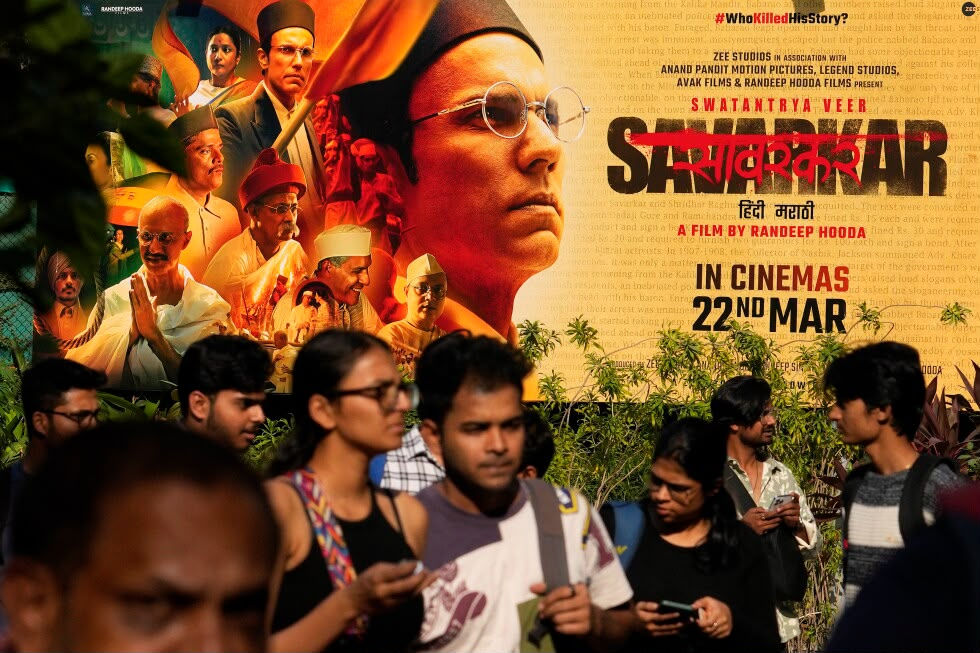
The answer may be ideological. The Hindutva project, of which the BJP is a product, finds ideological parallels with the Zionist movement. Both nationalist movements claim a right to a demographically pure homeland, sustained by an exclusion of the Other. Hindutva espouses a majoritarianism that deems the nationality of religious minorities inherently suspicious. Zionism echoes a similar ethno-nationalist project that confers a ‘right’ to the existence of a Jewish homeland from which the Palestinians must be displaced. The central alignment between the ideologies is their war against ‘Islamic' terrorism and subjugation of the civilian Muslim populations. The Hindutva ideologue V.D. Savarkar had stated way back in 1921 that “if the Zionists’ dreams are ever realised—if Palestine becomes a Jewish State it will gladden us almost as much as our Jewish friends”.
There is a significant difference between how Zionism and Hindutva perceive each other. For Hindutva, the Zionist movement is a successful model for ethno-nationalism that has resulted in the creation of the Jewish state of Israel. Zionism also acts as an effective bulwark against the Islamic world. Hindutva is cooperative with Zionism due to its resistance against Hindutva’s primary Other. Zionism on the other hand cannot accommodate any other religion because its political project depends on the Othering of the non-Jewish world.
India is historically one of the few places where Jews have not faced antisemitism. Ironically, the tradition of racial exclusion against Indians in Israel can be traced back to the initial migration of the Cochini and Bene Israel communities, who in spite of being Jews were subjected to systemic racism and apartheid by the European Ashkenazi Jews. Presently, the Hummus Trail is a manifestation of a disproportionate relationship. Hindutva proponents emphatically fraternise with Israel, yet the social reality along the trail suggests otherwise. The exclusionary practices of the Israeli tourists reveals that the fraternity is not one of equals.
Upon entering the town of Pushkar, Rajasthan one encounters a Chabad House (Jewish community centre), barricaded, with an attached police booth and Hebrew signage around its perimeter. The heavy police presence is because Indians are denied entry into the premises, as reported by several locals and visitors, while white tourists can enter free of scrutiny. The official justification given by the Rajasthan police cites security precautions against the risk of potential terrorist threats. In effect, the Indian police employed by the state bars Indians from entering an establishment in India, facilitating exclusion on behalf of a foreign community.


The Free Kasol Cafe in Kasol, Himachal Pradesh (the most popular mini-Israel) which gained notoriety for being an Israeli-only cafe provides another instance. There are several reports where the owner has gladly served Israelis but denied service to locals. The cafe has reportedly shut down due to lack of tourists during the COVID-19 pandemic and increased military drafting after the events of October 7th, 2023. The exclusivity of such establishments cements that, for the Israelis, the Indo-Israel relationship is merely ‘strategic’.
These incidents, among numerous others, can be used to deduce the import of a colonial logic, wherein racial superiority is used to discriminate against Indians on Indian soil. The formation of ‘mini-Israels’ is reminiscent of the settler-colonial mindset characteristic of Zionism. An apartheid against the indigenous Palestinians is being played out in Israeli-occupied settlements in the West Bank, the racial logic of which can also be seen here. Regardless of the exclusion, cafes in Kasol, Dharamkot and Pushkar proudly display pictures of IDF soldiers depicted as martyrs and flags symbolising the strong bilateral relationship between India and Israel. The Israelis continue to treat these pockets of land as a home away from home, while disregarding local populations.

Similar instances have been observed in several Asian countries where the influx of Israeli tourists has increased in recent years. Locals across Vietnam, Thailand and Sri Lanka have called out the condescension unique to Israeli tourists. Here too, they have established schools, businesses and community centres with restricted entry, creating local unease. In a viral clip, an Israeli tourist was seen arguing with a Thai cafe owner, claiming that it was their money that had built Thailand. Collective frustration with their behaviour finally prompted the Thai government to partner with the Israeli Embassy to launch an AI-powered chatbot that would educate tourists on cultural sensitivities. Shop and restaurant owners have also pasted signs at their entrances that refuse entry to Israeli tourists. Citizens in these countries pushed back against the Israeli tourists whereas no similar outrage has been seen in India. In fact, the former Israeli ambassador to India stated in 2023 that several Indians had expressed their desire to volunteer for the IDF on the embassy’s social media platforms. He added that with the number of requests the embassy received, “they could have another IDF” consisting of Indian volunteers. The recognition of Israeli chauvinism and the solidarity expressed by citizens of the other countries are striking in contrast to the Indian Hummus Trail.
Two British tourists recently attempted to oppose the Indian government’s unwavering support for Israel while visiting Pushkar in February 2026. The tourists were served a ‘Leave India’ notice and had their visas cancelled for pasting ‘Free Palestine’ stickers around the town. According to the Rajasthan Crime Investigation Department (CID), this act was seen as anti-Israel and “disrespecting other nations while on Indian soil.”
The incumbent government has consistently leaned closer towards Israel and suppressed any modicum of support for Palestine. The Hummus Trail now serves as a site for Hindutva to empathise with Zionism. While people around the world condemn Israel and the crimes of Benjamin Netanyahu, much of Indian society continues to buy into the Zionist agenda. The posturing of the government trickles down to civil society, and the Palestinian cause and the genocide of its people are silenced.
[Edited by Nikita Bose and Avika Mantri]

Comments